
When words are not enough, symbols can give experience a visible form.
Symbol Work for coaching, counselling and psychosocial education
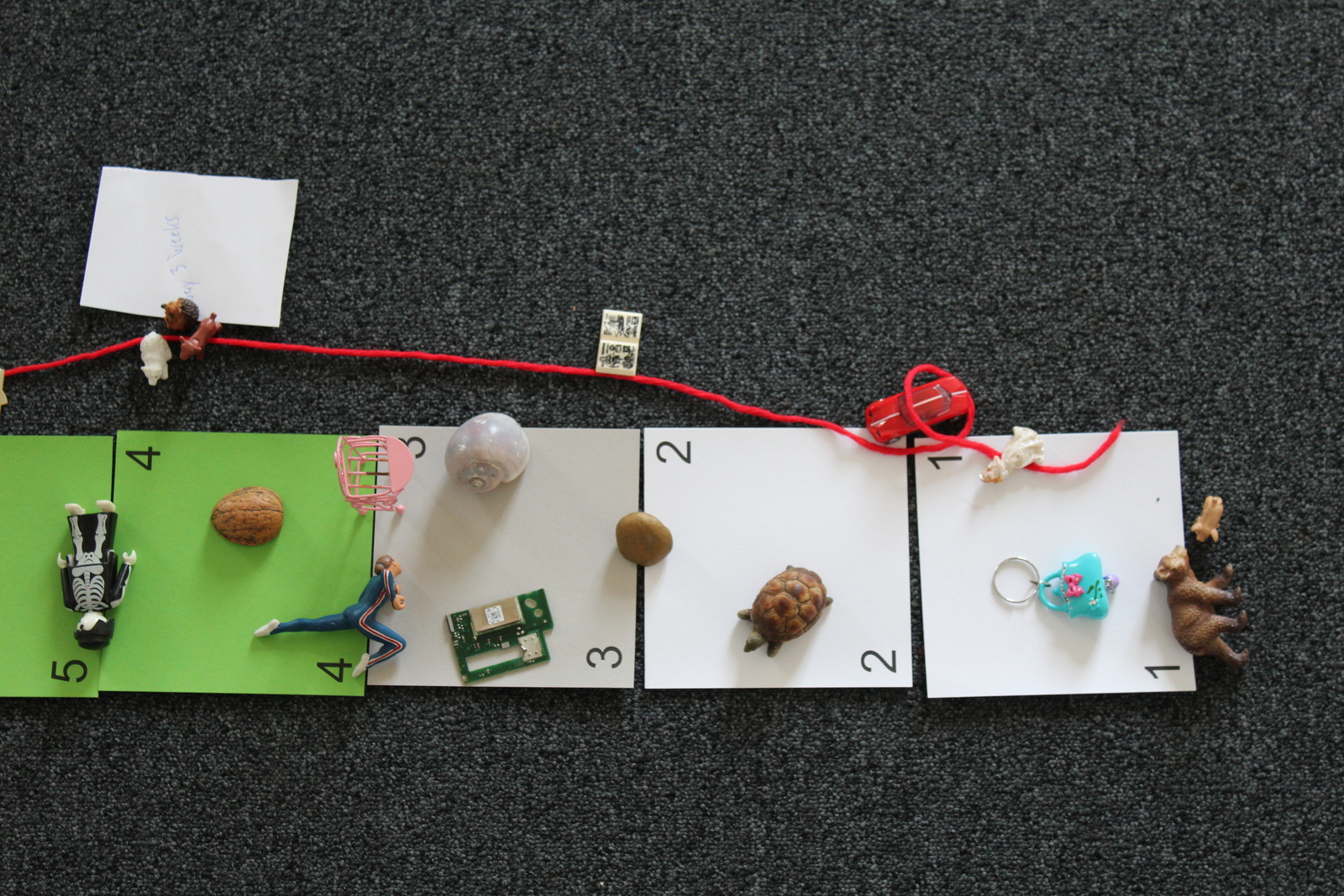
Symbol Work is a structured method for coaching, counselling, supervision and psychosocial education. It uses concrete objects, images, figures, paths and spatial arrangements to make experiences, conflicts, resources and goals visible before they are fully available in words.
At GeSoB, Symbol Work is not understood as a technique of fixed interpretation. A symbol is not a secret code to be decoded by the facilitator. It is a medium of meaning. The person working with the symbols remains the expert of their own life, experience and decisions. The facilitator is responsible for the frame, the material, the process and protection.

What Symbol Work can support
Symbol Work helps people gain distance, sharpen perception and develop new perspectives. A topic receives an external form. This form can be observed, described, questioned, complemented, moved or rearranged. The process leads from inner experience to a visible image, then to language, decision and action.
- Clarification of questions, conflicts and decisions
- Work with resources, goals and next steps
- Reflection in coaching, counselling and supervision
- Career guidance, youth work and transition support
- Team and organisational development
- Training for professionals in psychosocial and educational fields
The 5 working steps in Symbol Work
In group-based Symbol Work, the participant first builds the representation alone and without observers. Only when the representation is complete does the group sit around the arrangement and the participant. The process then follows a clear structure:

1. Presentation
The participant names the title or topic of the representation. They explain what they have arranged and clearly state which symbol they are talking about.
2. Factual questions
The group asks factual questions only about the symbols and what can be seen. This step is about understanding, not interpretation. Why-questions are avoided.
3. Perception
The group addresses the participant directly and describes perceptions from the presentation: gestures, facial expression, posture, breathing, voice, emotions or touching of symbols. Perceived emotions are linked to observable signs.
4. Interpretation
The group now talks about the participant and thinks aloud. It formulates hypotheses and questions: What might the problem be? What should be different? Where might it become difficult? The participant listens and does not answer at first.
5. Agreed actions
At the end, the participant responds: what fits, what does not fit, where doubts remain and what is especially important. Together with the trainer, concrete next steps are agreed.
Professional attitude and boundaries
Symbol Work can touch emotional and biographical themes. It therefore needs voluntary participation, clear goals, a protected setting and careful facilitation. Symbols are not fixed, dramatised or used against a person. The method opens perception and language, but it does not replace therapeutic assessment where issues are highly distressing or clinically relevant.
Symbol Work at GeSoB
GeSoB combines practical Symbol Work inspired by Wilfried Schneider with European project experience, psychosocial education and method development. The approach has been transferred and further developed in projects such as SymfoS, SymfoS for Youth Care and SOCS.
We offer coaching, workshops, training and methodological support for professionals, teams and organisations.